MACRO TRACKING WITHOUT LOSING YOUR MIND: A PRACTICAL STARTING POINT
Tracking macros works. But most people overcomplicate it from the start and quit within two weeks. Here is how to actually make it stick.
Macro tracking is one of those things that sounds more complicated than it is. People hear the word macronutrients and picture spreadsheets, food scales, and obsessive weighing of every bite. And while some people do take it that far, you do not have to. The basics are simple enough that most people can get them down in a week.
Macronutrients are protein, carbohydrates, and fat. Everything you eat contains some combination of these three. Tracking macros means knowing, roughly, how much of each you are eating every day and making sure those numbers align with your goals. That is the whole concept.
WHY MACROS MATTER MORE THAN CALORIES ALONE
Calories matter for weight. If you eat more than you burn, you gain weight. If you eat less, you lose. That part is true and it is not going away regardless of what the latest trend says.
But two people can eat the exact same number of calories and have completely different results if the composition of those calories is different. Someone eating 2,000 calories with 220 grams of protein will preserve significantly more muscle during a fat loss phase than someone eating 2,000 calories with 80 grams of protein. The scale might move the same for both of them, but what happens to their body composition will be very different.
Protein is the macro that most people undereat, and it is also the one that matters most for both fat loss and muscle building. It keeps you full, it preserves muscle tissue when you are in a deficit, and it requires more energy to digest than carbohydrates or fat. Getting protein right is more important than perfecting anything else.
Carbohydrates are your primary fuel source for training. They are not the enemy. Cutting carbs drastically might help you lose water weight quickly but it tends to tank your training performance, which undermines the whole goal. Carbs should be positioned around your training when possible.
Fat is essential for hormone function, including testosterone production, which matters for muscle growth and general health regardless of your gender. Fat should make up a meaningful portion of your daily intake. Eliminating it is counterproductive.
SETTING YOUR STARTING NUMBERS
A commonly used starting point for protein is 0.8 to 1 gram per pound of bodyweight. If you weigh 180 pounds, aim for 144 to 180 grams of protein per day. For most people, especially those who are strength training, staying toward the higher end makes sense.
Calorie targets depend on your goal. For fat loss, a moderate deficit of 300 to 500 calories below your maintenance level is sustainable without destroying your performance or triggering excessive muscle loss. For muscle gain, a surplus of 200 to 300 calories with a high protein intake gives your body what it needs to build without gaining excessive fat.
The exact numbers matter less than you think in the beginning. Getting your protein close to your target and keeping your total calories in the right zone will take you most of the way there. Obsessing over perfect splits before you have even built the habit of tracking is wasted energy.
HOW TO ACTUALLY TRACK
Download MyFitnessPal, Cronometer, or any similar app. Search for what you eat, log it, and try to hit your targets. That is the process.
The part that trips people up is estimating portion sizes. A food scale helps enormously here, especially in the first few weeks. You do not have to use one forever, but using it initially teaches you what four ounces of chicken actually looks like, what 40 grams of oats is, and how off your guesses probably are. Most people underestimate portions significantly.
If you eat out a lot, look for the restaurant's nutrition info and log it. When it is not available, make your best estimate and move on. Perfect tracking is not the goal. Consistent, close-enough tracking is.
THE HABITS THAT MAKE IT SUSTAINABLE
Build a short list of meals you eat regularly and that you enjoy. Once you have logged them a few times, they become quick to enter and you start to intuitively know what is in them. Eating the same meals repeatedly is not as boring as it sounds when the food is food you actually like, and it dramatically reduces the mental load of tracking.
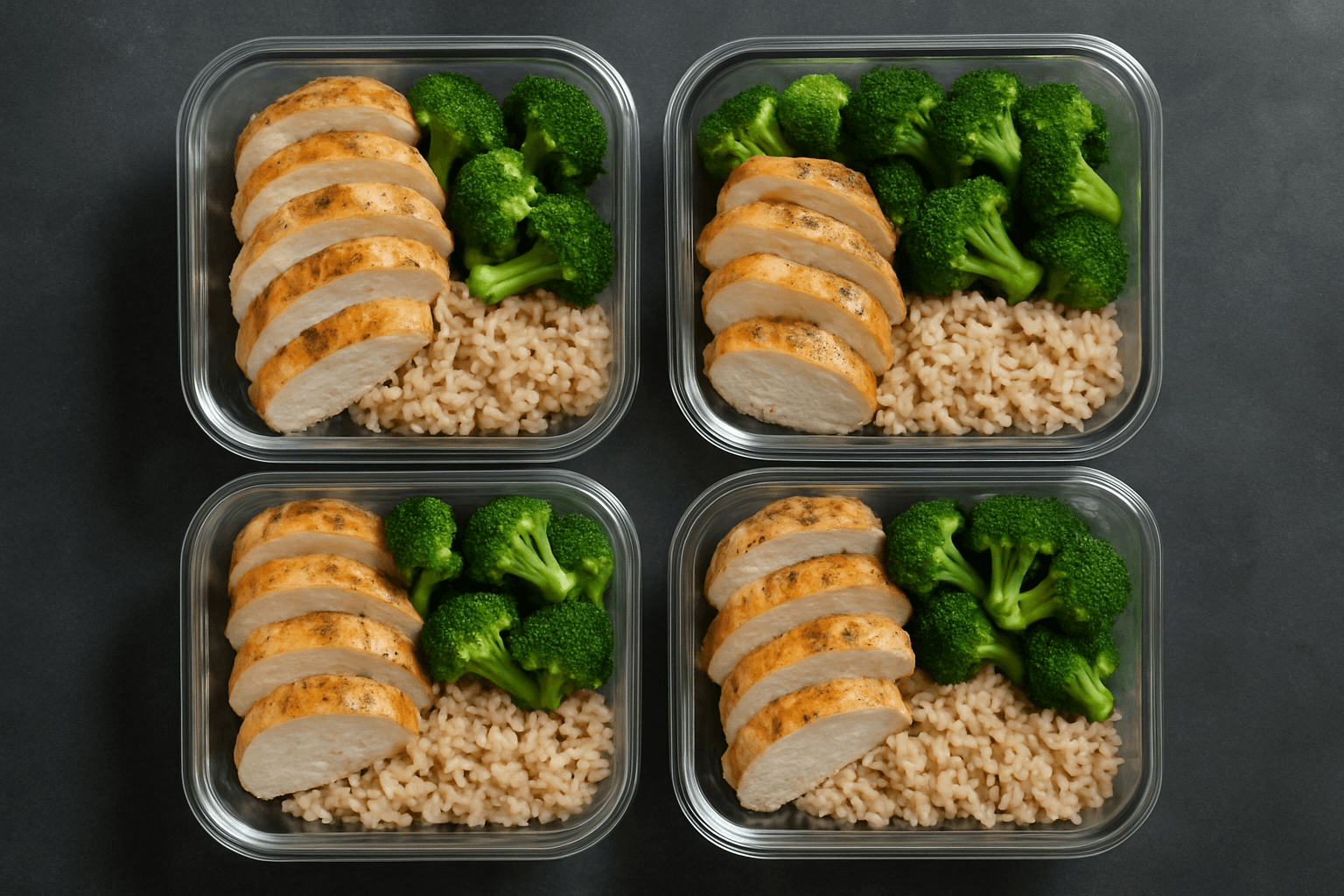
Prep your protein in advance. Cook a batch of chicken, ground turkey, eggs, or whatever your preferred source is. Having it ready means you are less likely to skip it or replace it with something that does not fit your plan. Protein is the hardest macro to hit consistently and prepping it ahead is the most reliable fix.
Do not try to be perfect from day one. If your target is 180 grams of protein and you hit 145, that is not failure. It is information. Most people who stick with macro tracking long enough to see results did not track perfectly from the start. They just kept showing up and adjusting.
WHEN TO GET A COACH INVOLVED
If you have been tracking for a month and not seeing any progress, the issue is usually one of three things. Your tracking is less accurate than you think, your targets are not calibrated correctly for your body, or your training is not providing enough of a stimulus to drive change. A coach who reviews your numbers and your training can usually identify the issue quickly and fix it.
Generic macro calculators online are a starting point, not a prescription. Your metabolism, activity level, training intensity, and how your body responds to different calorie levels are all individual. A custom plan built around your actual situation will outperform a generic one consistently.
TRAIN WITH A COACH
Everything in this article applies differently depending on where you are in your journey. A coach builds the plan around your specific situation, tracks your numbers, and adjusts as you progress. No guesswork.
Get Started